Showing posts with label Care. Show all posts

Saturday, September 28, 2013

Nursing Care Plan for Bronchiectasis

Nursing Care Plan for Bronchiectasis


Bronchiectasis


Bronchiectasis is destruction and widening of the large airways.


  • If the condition is present at birth, it is called congenital bronchiectasis.

  • If it develops later in life, it is called acquired bronchiectasis.


Causes


Bronchiectasis is often caused by recurrent inflammation or infection of the airways. It most often begins in childhood as a complication from infection or inhaling a foreign object.


Cystic fibrosis causes about half of all bronchiectasis in the United States. Recurrent, severe lung infections (pneumonia, tuberculosis, fungal infections), abnormal lung defenses, and obstruction of the airways by a foreign body or tumor are some of the risk factors.


The condition can also be caused by routinely breathing in food particles while eating.


Symptoms


Symptoms often develop gradually, and may occur months or years after the event that causes the bronchiectasis.


They may include :


  • Bluish skin color

  • Breath odor

  • Chronic cough with large amounts of foul-smelling sputum

  • Clubbing of fingers

  • Coughing up blood

  • Cough that gets worse when lying on one side

  • Fatigue

  • Paleness

  • Shortness of breath that gets worse with exercise

  • Weight loss

  • Wheezing


www.nlm.nih.gov


Assessment


  1. History or presence of supporting factors

    • Smoking

    • Living or working in areas with severe air pollution

    • History of allergies in the family

    • There is a history of acid in childhood.


  2. History or the presence of trigger factors such exacerbations :

    • Allergen (pollen, dust, skin, pollen or fungal)

    • Emotional Sress

    • Excessive physical activity

    • Air pollution

    • Respiratory tract infections

    • The failure of the recommended treatment program


  3. Physical examination by focusing on the respiratory system include :

    • Assess the frequency and respiratory rhythm

    • Inpeksi color of skin and mucosal color menbran

    • Auscultation of breath sounds

    • Make sure that when patients use accessory muscles when breathing :

      • Lifting the shoulders during breathing

      • retraction abdominal muscles during breathing

      • Respiratory nostril


    • Assess if the symmetrical or asymmetrical chest expansion

    • Assess if the chest pain on breathing

    • Assess cough (whether productive or nonproductive). When you specify the color of sputum productive.

    • Determine if the patient has dispneu or orthopneu

    • Assess the level of consciousness.


Nursing Diagnosis and Intervention


  1. Ineffective airway clearance related to increased production of viscous secretions or secretion.

    Goal :
    Keep the airway patent with breath sounds clean / clear.


    Result Criteria :
    Showed the behavior to improve airway clearance (effective cough, and issued a secret.


    Action Plan :


    • Monitor the frequency of respiration. Note the ratio of inspiration and expiration.

    • Auscultation of breath sounds and record breath sounds.

    • Assess the patient to a comfortable position, height headboard and sat on the back of the bed.

    • Help the abdominal breathing exercise or lip.

    • Observations karakteriktik cough and Auxiliary measures for effectiveness cough efforts.

    • Depth of fluid intake till 3000ml/day appropriate cardiac tolerance and provide a warm and fluid intake between meals in lieu.

    • Give the drug as indicated.


  2. Changes in nutrition less than body requirements related to nausea, vomiting, sputum production, dispneu.

    Goal :
    Improvement in nutritional status and body weight patients


    Result Criteria :
    Patients did not experience further weight loss or maintain weight.


    Plan of action :


    • Monitor input and output every 8 hours, the amount of food consumed and body weight are weighed each week.

    • Create a fun atmosphere, an environment free of odor during mealtimes.

    • Refer patient to a dietitian to monitor food plan that will be consumed.

    • Encourage clients to drink at least 3 liters of fluid per day, if not get an IV.


Monday, September 23, 2013

Nursing Care Plan Acute Renal Failure - ARF

Nursing Care Plan Acute Renal Failure – ARF


Nursing Care Plan Acute Renal Failure

Acute Renal Failure Definition


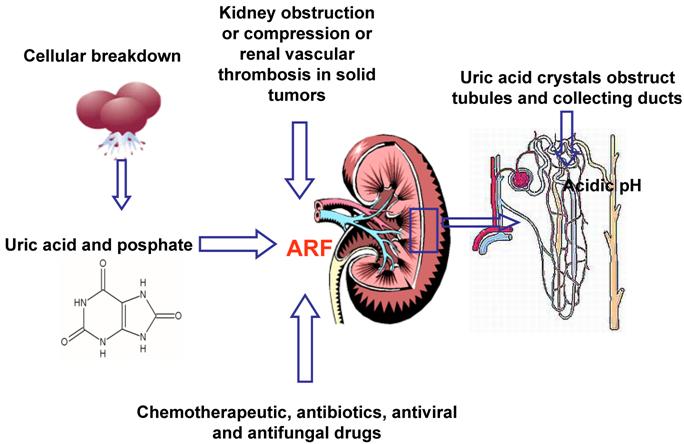
Acute renal failure (ARF) is the rapid breakdown of renal (kidney) function that occurs when high levels of uremic toxins (waste products of the body’s metabolism) accumulate in the blood. ARF occurs when the kidneys are unable to excrete (discharge) the daily load of toxins in the urine.


Based on the amount of urine that is excreted over a 24-hour period, patients with ARF are separated into two groups :


  • Oliguric: patients who excrete less than 500 milliliters per day (< 16 oz/day)


  • Nonoliguric: patients who excrete more than 500 milliliters per day (> 16 oz/day)


Acute Renal Failure Causes


Causes of acute kidney failure fall into one of the following categories:


  • Prerenal: Problems affecting the flow of blood before it reaches the kidneys


  • Postrenal: Problems affecting the movement of urine out of the kidneys


  • Renal: Problems with the kidney itself that prevent proper filtration of blood or production of urine


Acute Kidney Failure Symptoms


The following symptoms may occur with acute kidney failure. Some people have no symptoms, at least in the early stages. The symptoms may be very subtle.


  • Decreased urine production

  • Body swelling

  • Problems concentrating

  • Confusion

  • Fatigue

  • Lethargy

  • Nausea, vomiting

  • Diarrhea

  • Abdominal pain

  • Metallic taste in the mouth


Seizures and coma may occur in very severe acute kidney failure.


Nursing Care Plan for ARF – Acute Renal Failure


Acute Renal Failure Nursing Assessment


  1. Activity and Rest
    Symptoms:
    Fatigue, weakness, malaese

    Signs:
    Muscle weakness and loss of tonus


  2. Circulation

    Signs:
    Hypotension / hypertension (including malignant hypertension, eclampsia / hypertension due to pregnancy).
    Cardiac dysrhythmia.
    Pulse weak / soft orthostatic hypotension (hipovalemia).
    Strong pulse (hipervolemia).
    Edema public network (including the periorbital area of the sacrum ankle).
    Pale, bleeding tendency


  3. Elimination
    Symptoms:
    Changes in the pattern of urination, increased frequency, polyuria (early failure), or decrease the frequency / oliguria (final phase)
    Dysuria, doubt, encouragement, and retention (inflammation / obstruction, infection).
    Abdominal bloating, diarrhea or constipation.

    Signs:
    Change the color of dark yellow urine samples, red, brown, cloudy.
    Oliguric (usually 12-21 days), polyuria (2-6 liters / day).


  4. Food / Fluids
    Symptoms:
    Increased weight (edema), weight loss (dehydration).
    Nausea, vomiting, anorexia, heartburn
    Use of diuretics

    Signs:
    Changes in skin turgor / humidity.
    Edema (General, bottom).


  5. Neurosensori
    Symptoms:
    Headaches, blurred vision.
    Muscle cramps / spasms, syndrome “Restless legs”.

    Signs:
    Impaired mental status, examples of decline in the field of attention, inability to concentrate, memory loss, confusion, decreased level of consciousness (azotemia, electrolyte imbalance / acid-base.
    Seizures, seizure activity.


  6. Pain / Leisure
    Symptoms:
    Body aches, headache

    Signs:
    Cautious behavior / distraction, anxiety


  7. Respiratory
    Symptoms:
    Shortness of breath

    Signs:
    Takipnoe, dispnoe, increased frequency, kusmaul, ammonia breath, productive cough with thick pink sputum (pulmonary edema).


  8. Comfort
    Symptoms:
    Transfusion reaction

    Signs:
    Fever, sepsis (dehydration), or skin ptekie ekimosis, pruritus, dry skin.


  9. Counseling / Learning
    Symptoms:
    Family history of polycystic disease, hereditary nephritis, urinary stones, malignancies., a history of exposure to toxins, (drugs, environmental toxins), nephrotic repeated use of drugs eg aminoglycosides, amphotericin, anesthetic vasodilator.


Acute Renal Failure Nursing Diagnosis


  1. Excess fluid volume related to decreased Glomerular filtration rate and sodium retention.

  2. Imbalanced nutrition: less than body requirements related to catabolic state, anorexia, and malnutrition associated with acute renal failure.

  3. Risk for infection related to alterations in the immune system and host defenses.


Acute Renal Failure Nursing Intervention


1.Excess fluid volume related to decreased Glomerular filtration rate and sodium retention.


Goal : Achieving fluid and electrolyte balance


Nursing Intervention


  • Monitor urinary output and urine specific gravity; measure and record intake and output including urine, gastric suction, stools, wound drainage, perspiration (estimate).

  • Monitor serum and urine electrolyte concentrations.

  • Monitor for signs and symptoms of hypovolemia or hypervolemia because regulating capacity of kidneys is inadequate.

  • Inspect neck veins for engorgement and extremities, abdomen, sacrum, and eyelids for edema.

  • Evaluate for signs and symptoms of hyperkalemia, and monitor serum potassium levels.

  • Administer sodium bicarbonate or glucose and insulin to shift potassium into the cells.

  • Instruct patient about the importance of following prescribed diet, avoiding foods high in potassium.

  • Prepare for dialysis when rapid lowering of potassium is needed.


2. Imbalanced nutrition: less than body requirements related to catabolic state, anorexia, and malnutrition associated with acute renal failure.


Goal :
Maintaining adequate nutrition


Nursing Intervention


  • Monitor BUN, creatinine, electrolytes, serum albumin, prealbumin, total protein, and transferrin.

  • Be aware that food and fluids containing large amounts of sodium, potassium, and phosphorus may need to be restricted.

  • Offer high-carbohydrate feedings because carbohydrates have a greater protein-sparing power and provide additional calories.

  • Work collaboratively with dietitian to regulate protein intake according to impaired renal function because metabolites that accumulate in blood derive almost entirely from protein catabolism.

  • Prepare for hyperalimentation when adequate nutrition cannot be maintained through the GI tract.


3. Risk for infection related to alterations in the immune system and host defenses.


Goal :


Nursing Intervention


  • Remove bladder catheter as soon as possible; monitor for UTI.

  • Use intensive pulmonary hygiene high incidence of lung edema and infection.

  • Monitor for all signs of infection. Be aware that renal failure patients do not always demonstrate fever and leukocytosis.

  • If antibiotics are administered, care must be taken to adjust the dosage for renal impairment.


Source : http://www.nephrologychannel.com/arf/index.shtml http://www.emedicinehealth.com/acute_kidney_failure/page3_em.htm#Acute%20Kidney%20Failure%20Symptoms


Thursday, September 19, 2013

Nursing Care Plan for Obesity

Obesity is a global problem that plagued the world today. Lifestyle changes including the propensity to consume foods high in fat is a factor contributing to obesity.


The majority of obesity is due to overeating. It is considered the primary obesity. And others, caused by disease or hormonal disorders or genetic disorders that are in the secondary obesity.


Efforts to streamline the body have been conducted, including the dietary, lifestyle changes, medication and surgery to reduce fat or remove some of the intestines.


Food intake should always be sufficient to meet the needs of the body’s metabolism and is also not excessive, causing obesity. Also, because the foods contain different proportions of protein, carbohydrate, and fat are different, then a reasonable balance must be maintained among all of these foods so that all segments of the body’s metabolic system can be supplied with the materials needed.


Definition of Obesity


Obesity is defined as the excess accumulation of body fat, at least 25% of the average weight for age, sex, and height.


Obesity is also a pathological condition with the presence of an excessive accumulation of fat than is necessary for bodily functions. Nutritional problems due to excess calories usually accompanied by excess fat and protein, fiber and micro-nutrient excess. Nutrients that would be a risk factor for the occurrence of various types of degenerative diseases such as diabetes, hypertension, coronary heart disease, rheumatism and various types of malignant disease (cancer) and other health problems that would require a very large medical expenses.


Clinical Manifestations of Obesity


Obesity can occur in all age groups, but usually occurs in children and adolescents in the period ahead of teens, especially girls, in addition to body weight increased rapidly, as well as more rapid growth and development (apparently if you check the age of the bones), so that ultimately adolescents rapidly grow and mature it will have a relatively low height compared to children her own age.


Body shape, appearance and expression in patients with obesity:


a. Thighs look great, especially on the proximal, relatively small hands with fingers shaped tapered.


b. Emotional expression disorder, nose and mouth appears to be relatively small with a double chin shaped.


c. Chest and enlarged breasts, breast forms similar to the breast that had been grown in male children such circumstances lead to an unpleasant feeling.


d. Abdomen, and hung bulge, similar to the form of pendulum clocks, there are sometimes white or purple strie.


e. Upper arms enlarged, the enlargement of the upper arm is usually found in the biceps and triceps.


In people, common symptoms of emotional distress which may be the cause or circumstances of obesity.


Nursing Care Plan for Obesity

Nursing Care Plan for Obesity

Nursing Assessment for Obesity


Physical Examination


1. Activity / Rest
symptoms:
– Weakness, drowsiness trended
– Inability / lack of desire to be active or exercise regularly
– Dyspnea with work
signs:
– Increased heart rate / breathing with activity


2. circulation
symptoms:
– History of cultural factors / lifestyle affects food choices
– Weight loss can / can not be accepted as a problem
– Eating may relieve feelings of pleasure, such as loneliness, frustration, boredom
– Prisoners of the closest people to lose weight


3. Food / fluid
symptoms:
– Digesting food with excess / normal
– Experiment with different types of diet with little results
– History repeated and decreased weight gain
signs:
– Weight loss is not right with height
– Endormofik body type (soft / about)
– Failed to determine the input of food to reduce demand (eg, changes in lifestyle from active to not exercise, aging)


4. Pain / Comfort
Symptoms: Pain / discomfort in the joints that support weight loss or spine


5. Breathing
Symptoms: Dyspnea
Signs: cyanosis, respiratory distress


6. Sexuality
Symptoms: menstrual disorders, amenorrhea


7. Education / learning
symptoms:
– Problems can be either lifetime or in connection with life events
– Family history of obesity
– Health problems that accompany diabetes, including hypertension, gallbladder disease and cardiovascular disease, hypothyroidism


Nursing Diagnosis  for Obesity


Nursing Interventions for  Obesity


Tuesday, September 17, 2013

Nursing Care Plan Respiratory Acidosis (Primary Carbonic Acid Excess)

Bookmark and Share

CARE SETTING

This condition does not occur in isolation, but rather is a complication of a broader health problem/disease or condition for which the severely compromised patient requires admission to a medical-surgical or subacute unit.


RELATED CONCERNS


  1. Plans of care specific to predisposing factors/disease or medical condition, e.g.:

  2. Cerebrovascular accident (CVA)/stroke

  3. Chronic obstructive pulmonary disease (COPD) and asthma

  4. Craniocerebral trauma (acute rehabilitative phase)

  5. Eating disorders: obesity

  6. Alcohol: acute withdrawal

  7. Spinal cord injury (acute rehabilitative phase)

  8. Surgical intervention

  9. Ventilatory assistance (mechanical)


OTHER CONCERNS


  1. Fluid and electrolyte imbalances

  2. Metabolic acidosis

  3. Metabolic alkalosis

  4. Patient Assessment Database

  5. Dependent on underlying cause. Findings vary widely.


ACTIVITY/REST

May report: 
Fatigue, mild to profound


May exhibit: 
Generalized weakness, ataxia/staggering, loss of coordination (chronic), to stupor


CIRCULATION

May exhibit: 


  1. Low BP/hypotension with bounding pulses, pinkish color, warm skin (reflects vasodilation of severe acidosis)

  2. Tachycardia, irregular pulse (other/various dysrhythmias)

  3. Diaphoresis, pallor, and cyanosis (late stage)


FOOD/FLUID

May report: 
Nausea/vomiting


NEUROSENSORY

May report: 


  1. Feeling of fullness in head (acute—associated with vasodilation)

  2. Headache, dizziness, visual disturbances


May exhibit: 


  1. Confusion, apprehension, agitation, restlessness, somnolence; coma (acute)

  2. Tremors, decreased reflexes (severe)


RESPIRATION

May report: 
Shortness of breath; dyspnea with exertion


May exhibit: 


  1. Respiratory rate dependent on underlying cause, i.e., decreased in respiratory center depression/ muscle paralysis; otherwise rate is rapid/shallow

  2. Increased respiratory effort with nasal flaring/yawning, use of neck and upper body muscles

  3. Decreased respiratory rate/hypoventilation (associated with decreased function of respiratory center as in head trauma, oversedation, general anesthesia, metabolic alkalosis)

  4. Adventitious breath sounds (crackles, wheezes); stridor, crowing


TEACHING/LEARNING


  1. Refer to specific plans of care reflecting individual predisposing/contributing factors.

  2. Discharge plan

  3. DRG projected mean length of inpatient stay: 4.9 days

  4. May require assistance with changes in therapies for underlying disease process/condition

  5. Refer to section at end of plan for postdischarge considerations.


DIAGNOSTIC STUDIES


  1. ABGs: PaO2: Normal or may be low. Oxygen saturation (SaO2) decreased.

  2. PaCO2: Increased, greater than 45 mm Hg (primary acidosis).

  3. Bicarbonate (HCO3): Normal or increased, greater than 26 mEq/L (compensated/chronic stage).

  4. Arterial pH: Decreased, less than 7.35.


  5. Electrolytes: Serum potassium: Typically increased.

  6. Serum chloride: Decreased.

  7. Serum calcium: Increased.

  8. Lactic acid: May be elevated.


  9. Urinalysis: Urine pH decreased.

  10. Other screening tests: As indicated by underlying illness/condition to determine underlying cause.


NURSING PRIORITIES


  1. Achieve homeostasis.

  2. Prevent/minimize complications.

  3. Provide information about condition/prognosis and treatment needs as appropriate.


DISCHARGE GOALS


  1. Physiological balance restored.

  2. Free of complications.

  3. Condition, prognosis, and treatment needs understood.

  4. Plan in place to meet needs after discharge.


Saturday, September 14, 2013

Danetre Hospital wins national award for end-of-life care

Danetre Hospital wins national award for end-of-life care Staff from Danetre Hospital inpatient ward, which is managed by NGH, are celebrating after receiving a national award recognising their high quality of care for people nearing the end of life. NGH News

Northamptonshire’s ambulance trust helps prosecute most alleged attackers:
Thugs who attack East Midlands Ambulance Service (EMAS) staff are convicted at double the rate of the next best trust, latest figures show. Northampton Chronicle and Echo

Stores to sell asthma inhalers: Asthma inhalers will go on sale in supermarkets for the first time, allowing sufferers to get the medicine without seeing their doctor. BBC News

Best practice guide for CCGs aims to cut costs and boost quality: A best practice guide to a dozen clinical commissioning group (CCG) success stories is the first publication by CCG representative body NHS Clinical Commissioners (NHSCC). GP Online

When doctors and patients talk: making sense of the consultation:
This report explores the main form of interaction between a patient and a clinician – the consultation. It offers an analysis of the current relationship and describes the potential for a more nuanced model for the consultation. It makes recommendations for commissioning bodies and service providers to develop programmes that will boost patient skills and confidence and also to support doctors who are keen to experiment with new ways of working.


Young people’s views and experiences of GP services in relation to emotional and mental health:
This research was conducted to assess young people’s experiences of visiting their GP in order to identify responses they would like in relation to their mental and emotional health and what improvements are required to enable them to have a better experience.


Clinical commissioning in action:
This publication shares learning from CCGs around England in the form of case studies. Each case study illustrates an example of successful outcomes and service provision.


Can open data spark long-awaited change in the NHS?:

In other services, open data is making a real difference and could do the same for healthcare
The coalition government has made transparency and open data a defining theme of its agenda and has set out its ambition for the UK to become a world leader in informatics and healthcare data management.
The prime minister has pledged a “complete revolution in transparency”, with the raw data that will allow people to analyse the performance of public services being made freely available.
Ultimately, though, the chief barrier within the health service is culture, not kit. Years ago Rudolf Klein said society had stopped thinking of doctors as high priests and started to consider them more as mechanics, more like the technicians of your local garage than the miracle workers of your local church. In fact, in the main the NHS remains our national religion and the doctors its clergy: can data and information spark the long-awaited reformation in the balance of power?
Publication of clinical outcomes has helped improve the quality of healthcare and many leading NHS providers are developing sophisticated IT systems to manage performance. Reform is working with the Cabinet Office and PA Consulting on a series of events to explore this theme and on 19 July held a breakfast meeting with Earl Howe, parliamentary under-secretary of state for health on the topic of informing people; empowering patients.
Howe made it clear that the open data white paper and the Department of Health’s information strategy make publishing of performance data mandatory.
Data about organisational performance can have a transformative effect. As Reform has shown in numerous case studies, high performing systems use every possible channel to care for patients – a dedicated website enables them to browse for information, they can view lab results online through a secure server on the same day as the test, receive email reminders about appointments, drug dosages and more, book appointments online, by email and over the phone, and email or call doctors, nurses and pharmacists with questions.
At Kaiser Permanante and the Cleveland Clinic in the US, to name just two examples, doctors are also benchmarked against each other on clinical indicators, from how good they are at monitoring their patients and reaching out to them through to the outcomes of their treatments.
The opportunities of “big data” groups are considerable. For example, predictive risk modelling can have considerable benefits. In healthcare as in other walks of life the 80:20 rule applies: 80% of the money goes on 20% of the people.
In the US this summer I learned about how McKesson, a global health technology company, won a four-year contract for the Illinois Medicare budget. The first thing they did was run the numbers. They audited terabytes of government data – about patient referrals, treatments and payments – looking for patterns. From this they were able to identify those who were ill and those most at risk of getting ill.
Then they contacted each citizen to verify this and assigned them case managers: at-risk patients received intensive preventative care; “frequent flyers” were carefully monitored with regular calls and checks, visited at home by social workers, given advice about diet and exercise, treated in local clinics rather than the emergency room, and so on. Over four years from 2005-2009, McKesson saved the government $ 569m (£362m) and improved the quality of the care.
This shows that compassion and technology aren’t necessarily incompatible; they can be mutually reinforcing. But there are further spin-offs. Aggregating this kind of information will enable us to understand much better which clinical therapies deliver most value. In this, there are, as PA’s Colm Reilly explained at the meeting, growth opportunities for the UK’s life sciences industry.
So far, progress in the NHS has been slow. In 1858 Florence Nightingale penned a “Proposal for Improved Statistics of Surgical Operations”, but only in 2006 did the Society of Cardiothoracic Surgeons start to make their mortality data publicly available. They were pushed into doing so by the president, Bruce Keogh, now medical director of the NHS.
Since then, raw data for individual surgeons has been openly displayed online against a mortality range based on patient characteristics. No other speciality has managed to do the same. Veena Raleigh, from the King’s Fund, pointed out the paucity and integrity of clinical information about care quality in general practices and community services is worrying. A recent BMJ editorial also called on the royal colleges and the medical societies – naming and shaming them – to show leadership. “What are you doing?” asked its editor, Fiona Godlee.
There are legitimate reasons for caution, of course. It is essential that data is of a high quality, that there are high standards, that the data is secure (Kaiser Permanante’s My health manager patient portal is set up with higher security than most online banking sites), and that it is protected not only with good protocols but also good governance.
If it is to do so, not only will the medical profession have to let go: patients will have to get more involved. We have to engage the public with the simple truth that the health service cannot succeed in the future unless users and citizens recognise their own role in helping those services do more with less. We have to make our own efforts, whether it is looking after our health or managing our own conditions.
We also need to be willing to share data about our lifestyle and health conditions, but fear holds people back. Simon Eccles, a doctor, suggested the following question: “would you mind me sharing information about your health with my colleagues if it would save your life?” Two reports published by the Health Foundation on 19 July – When doctors and patients talk and Helping people share decision making – add to a growing body of research. If information is power, then shared information is shared power.
Nick Seddon is deputy director of the Reform thinktank Guardian Professional


Doctors fear ‘catastrophes’ on hospital wards at weekends: One in eight doctors does not think hospitals provide high-quality care at weekends.The Daily Telegraph

Private hospital told doctors to delay NHS work to boost profits:
A private hospital which accepts NHS work has instructed its doctors to artificially delay operations on non-paying patients to encourage them to pay fees. The Department of Health last night branded the practice “unacceptable” and pledged to intervene. The Independent


How mental health loses out in the NHS This report from the London School of Economics finds that mental illness accounts for 23% of the total burden of disease.  Yet, despite the existence of cost-effective treatments, it receives only 13% of NHS health expenditure.  Furthermore only a quarter of those suffering mental health problems are receiving any form of treatment. London School of Economics


Thursday, September 12, 2013

Nursing Care Plans Diagnosis for Respiratory Disorders


Nursing Care Plans for Respiratory Disorders, The respiratory system provides vital gas exchange by distributing air to the alveoli. Here, pulmonary capillary blood takes on oxygen (O2) and gives off carbon dioxide (CO2). Other gases, such as carbon monoxide, diffuse from pulmonary capillary blood to the alveoli, where they’re excreted by the lungs.

Below is common Nursing care plans for Respiratory Disorders and it’s main NANDA nursing care plans diagnosis


Nursing care plans for Croup

Main NANDA nursing care plans diagnosis:

• Anxiety 


• Disabled family coping

• Hyperthermia

• Impaired gas exchange

• Ineffective airway clearance


Nursing care plans for Epiglottiditis

Main NANDA nursing care plans diagnosis:

• Impaired gas exchange

• Impaired verbal communication

• Ineffective airway clearance


Nursing care plans for Respiratory distress syndrome (RDS)

Main NANDA nursing care plans diagnosis:

• Impaired gas exchange

• Impaired skin integrity

• Ineffective airway clearance


• Risk for injury


Nursing care plans for Sudden infant death syndrome (SIDS)

Main NANDA nursing care plans diagnosis:

Dysfunctional grieving

Fear

Hopelessness

Interrupted family processes

Risk for sudden infant death syndrome

Spiritual distress


Nursing care plans for Acute respiratory distress syndrome (ARDS)

Main NANDA nursing care plans diagnosis:

Decreased cardiac output

Impaired gas exchange

Impaired physical mobility

Ineffective airway clearance

Ineffective tissue perfusion: Cardiopulmonary


Nursing care plans For Acute Respiratory Failure

Main NANDA nursing care plans diagnosis:

Disturbed thought processes

Impaired gas exchange

Impaired skin integrity

Ineffective airway clearance

Ineffective breathing pattern

Ineffective tissue perfusion: Cardiopulmonary


Nursing Care Plans For Atelectasis

Main NANDA nursing care plans diagnosis:

Impaired gas exchange

Ineffective airway clearance

Ineffective breathing pattern


Nursing Care Plans For Cor Pulmonale

Main NANDA nursing care plans diagnosis:


Acute pain

Decreased cardiac output

Excess fluid volume

Impaired gas exchange

Ineffective airway clearance

Ineffective breathing pattern


Nursing Care Plans For Hemothorax

Main NANDA nursing care plans diagnosis:

Acute pain

Deficient fluid volume

Impaired gas exchange

Ineffective breathing pattern

Ineffective tissue perfusion: Cardiopulmonary


Nursing Care Plans For Pleural Effusion And Empyema

Main NANDA nursing care plans diagnosis:

Impaired gas exchange

Ineffective airway clearance

Ineffective breathing pattern


Nursing Care Plans for pleuritis/pleurisy

Main NANDA nursing care plans diagnosis:

Impaired gas exchange

Ineffective airway clearance

Ineffective breathing pattern


Nursing Care Plans for Pneumonia 

Main NANDA nursing care plans diagnosis:

Hyperthermia

Imbalanced nutrition: Less than body requirements

Impaired gas exchange

Ineffective airway clearance


Nursing Care Plans for Pneumothorax

Main NANDA nursing care plans diagnosis:

Impaired gas exchange

Ineffective breathing pattern

Ineffective tissue perfusion: Cardiopulmonary


Nursing Care Plans For Pulmonary Edema

Main NANDA nursing care plans diagnosis:

Excess fluid volume

Impaired gas exchange


Nursing Care Plans For Pulmonary Embolism

Main NANDA nursing care plans diagnosis:

Impaired gas exchange related to impaired pulmonary blood flow and alveolar collapse


Nursing Care Plans for Pulmonary Fibrosis

Main NANDA nursing care plans diagnosis:

Ineffective breathing pattern related to shortness of breath and difficulty breathing


Nursing Care Plans For Pulmonary Hypertension

Main NANDA nursing care plans diagnosis:

Activity intolerance

Decreased cardiac output

Impaired gas exchange


Nursing Care Plans for Asthma

Main NANDA nursing care plans diagnosis:

Ineffective airway clearance related to obstruction from narrowed lumen and thick mucus


Nursing Care Plans for Respiratory acidosis

Main NANDA nursing care plans diagnosis:

Decreased cardiac output

Impaired gas exchange

Ineffective airway clearance


Nursing Care Plans for Emphysema

Main NANDA nursing care plans diagnosis:

Impaired gas exchange related to destruction of alveolar walls


Nursing Care Plans for Laryngotracheobronchitis LTB(Croup)

Main NANDA nursing care plans diagnosis:

Ineffective airway clearance related to tracheobronchial infection and obstruction


Nursing Care Plans for Lung Cancer 

Main NANDA nursing care plans diagnosis:

Ineffective airway clearance related to obstruction caused by secretions or tumor


Nursing Care Plans for Tuberculosis (TB)

Main NANDA nursing care plans diagnosis:

Risk of infection related to tissue inflammation and infiltration caused by the TB bacilli


Wednesday, September 11, 2013

Chapter for Pharmacist-To-be : Pharmaceutical Care Plan for Asthma Patients

Recently, final year pharmacy student or/also known as the pharmacist-to-be, asked me about some questions regarding management of an asthmatic patient.

So to summarise the discussion, When comes to asthmatic patients, there are few things you ned to make it clear before you jump into recommendation:


1) Patient’s compliance on inhaler techniques. If non-compliance, there is a bigger issue for u to address before you add in an extra med.


2)How to step up and to step down in asthma management? What parameters you look at ?
If to step up, which agent will you choose ? What monitoring parameters are you interested to look at?
- after corticosteroid, what is next in the list?
- can long acting beta-agonist be given alone?
- what are the up-coming innovation in management of asthma patients, that could improve compliance, improve efficacy and reduce side effect?


3) think about what is the pathophysiology of asthma?
- why we will step up to inhale corticosteroid instead of other agent?


4) How different is the management of asthma vs COPD? why is it so?


5) How the difference of management of acute exacerbation of asthma vs chronic asthma?


6) What is the differences in inhaler corticosteroid and oral corticosteroid?
- why do we have an invention of inhaler?
- When do we oral (systemic) corticosteroid in management of asthma patient?

7) Check the differences in each corticosteroid inhaler (Budesonide, beclomethasone, ciclesonide, fluticasone, betamethasone) By finding the differences, You will then understand why in the market, there is so many different corticosteroid inhalers, and why some inhale corticosteroid were phased out from the market already.


8) can asthma patient be given aspirin?
if can, what would be your concern?
if cant, what would you recommend to your doctor?


If you could find out all the answers, you will have a better understanding of how to manage an asthma patient! But dont forget about his/her other co-morbidity(ies).